The Performence Paradox: Intro to Sports Nutrition
Nutrition has a long history of reductionism- the tendency to attribute complex health outcomes to a single nutrient, food, or dietary practice. Every few years, public discourse appears to anoint a new nutritional hero or villain, whether it's a macronutrient we've condemned or a wellness practice that's crowned the latest dietary messiah.
For a while, the internet had chosen to excommunicate fat. Dietary fat became synonymous with cardiovascular disease after early interpretations of lipid research and national dietary guidelines encouraged widespread adoption of low-fat eating patterns. Grocery store shelves quickly filled with fat-free products, many of which simply replaced fat with refined carbohydrates and added sugars.
As evidence linking excess added sugar and refined carbohydrates to metabolic disease accumulated, public messaging again shifted toward a single dietary culprit. Low-carbohydrate and ketogenic diets surged in popularity despite important differences between refined sugars, whole grains, legumes, and fruit.
More recently, protein has taken center stage. The emphasis on protein is understandable. Protein provides essential amino acids required for muscle protein synthesis, supports recovery following exercise, contributes to satiety, and helps preserve lean body mass during energy restriction. These are particularly important considerations for athletes. Concurrently, growing research into the gut microbiome has shifted attention toward gut health as another major pillar of nutrition and overall health.
I initially assumed this conversation existed only within the algorithm I had curated through the accounts I followed. Then I started noticing the same messages everywhere- there isn’t a single fast-food restaurant that I have not seen emerge with some protein breakfast taco of the century over the last 365 days.
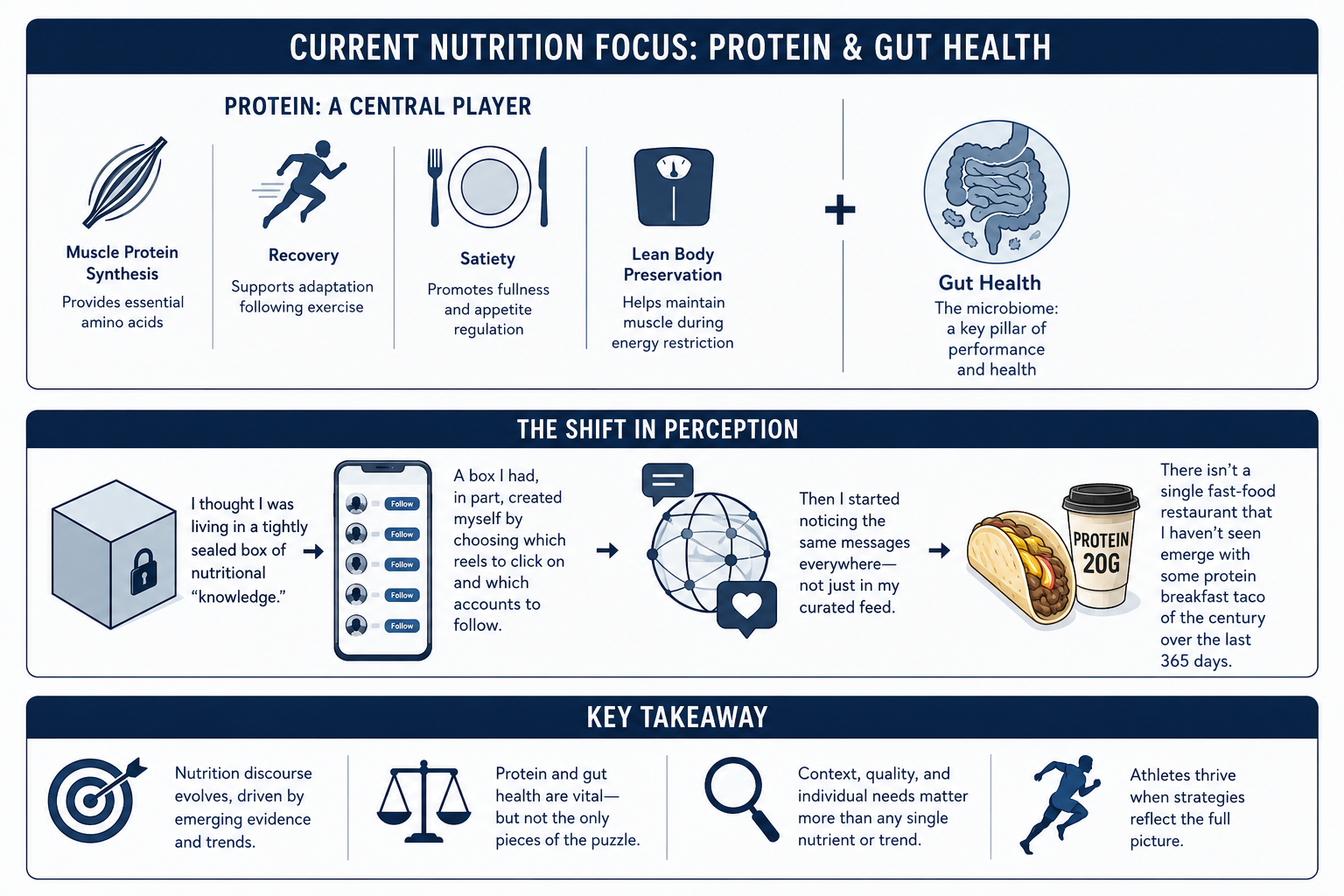
I can walk into a grocery store and find a protein-enhanced version of almost anything imaginable. At the same time, social media is saturated with advice about healing your gut and diversifying your microbiome- a complex ecosystem containing trillions of microorganisms whose composition is influenced by far more than fiber alone.
Dietary diversity, prebiotic fibers, resistant starches, fermented foods containing live microorganisms, polyphenol-rich foods, omega-3 fatty acids, and long-term dietary patterns all contribute to microbial composition.
Beyond nutrition, regular physical activity, sleep quality, chronic psychological stress, medications such as antibiotics, illness, and even travel can alter the gut microbiome. Yet much of the online conversation reduces this extraordinarily complex ecosystem to a handful of simple rules: avoid ultra-processed foods, eliminate artificial sweeteners, and eat thirty different plants each week.
Individually, none of these recommendations is unreasonable. The problem is that they often exist in isolation, presented as though they can all be maximized simultaneously.
In reality, they frequently compete with one another.
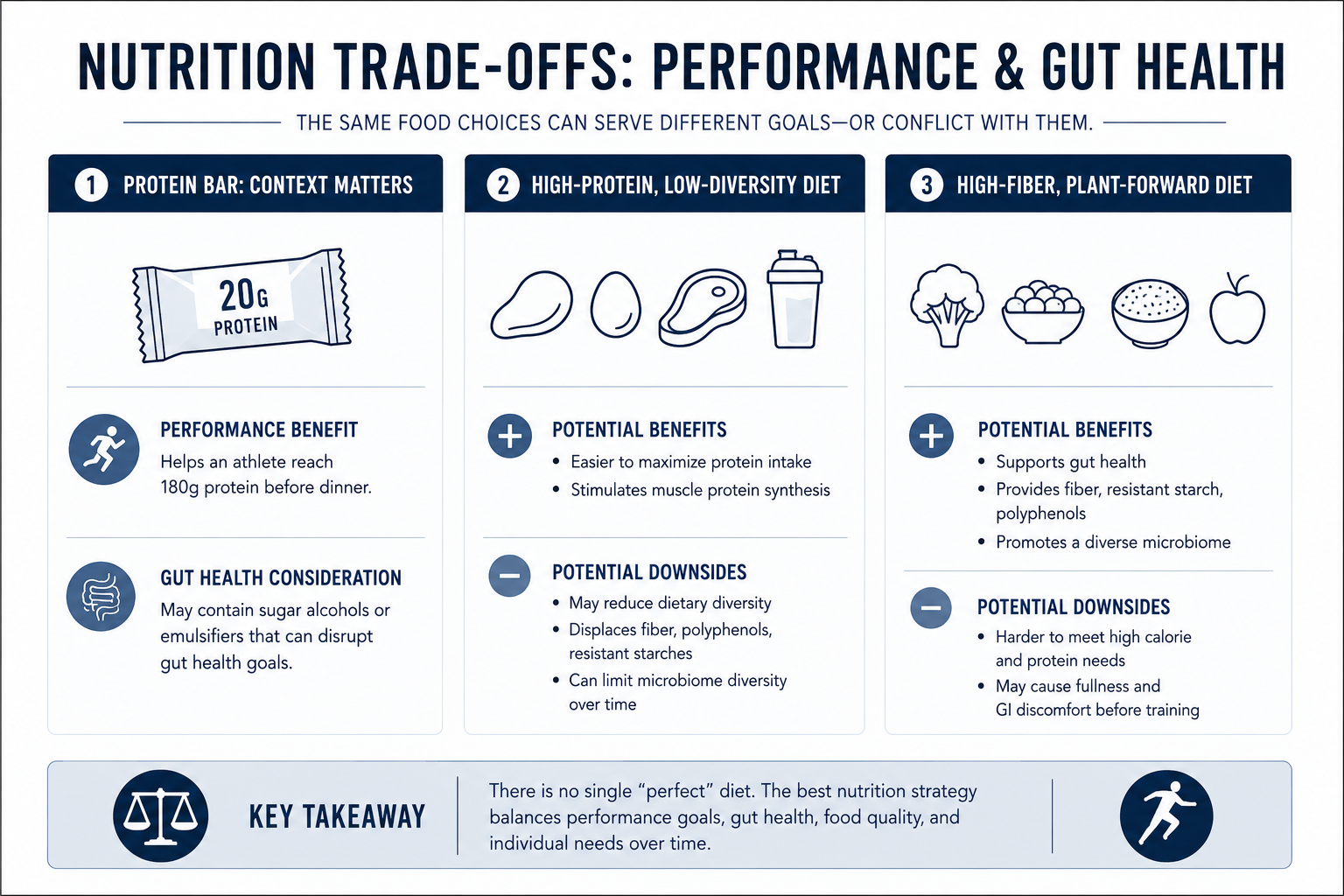
The same protein bar that helps an athlete reach 180 grams of protein before dinner may contain sugar alcohols or emulsifiers that someone trying to optimize gut health is actively avoiding.
A diet centered around chicken, eggs, steak, and protein shakes can make it easier to maximize protein intake and stimulate muscle protein synthesis, but it may also reduce dietary diversity if those foods consistently displace fruits, vegetables, legumes, whole grains, nuts, seeds, and fermented foods. Over time, this can limit the availability of fibers, resistant starches, and polyphenols that support a diverse gut microbiome.
On the other hand, prioritizing large amounts of fiber-rich fruits, vegetables, legumes, and whole grains may support gut health, but it can also make it harder for athletes to consume enough calories and protein, or leave them feeling uncomfortably full before training.
For athletes with exceptionally high energy demands, this challenge extends beyond meal composition to meal volume. Endurance athletes, swimmers, cyclists, rowers, and other high-volume trainers may require 4,000 to 6,000 calories- or considerably more during periods of intense training- to support glycogen replenishment, muscle protein synthesis, endocrine function, and recovery.
Diets composed primarily of high-fiber, high-volume foods promote satiety, which is generally beneficial for the general population, but can become a limiting factor for athletes who simply cannot meet their energy needs before becoming uncomfortably full. In these situations, strategically incorporating lower-fiber carbohydrates or more energy-dense foods isn't a compromise in health; it's often a physiological necessity to maintain adequate energy availability.
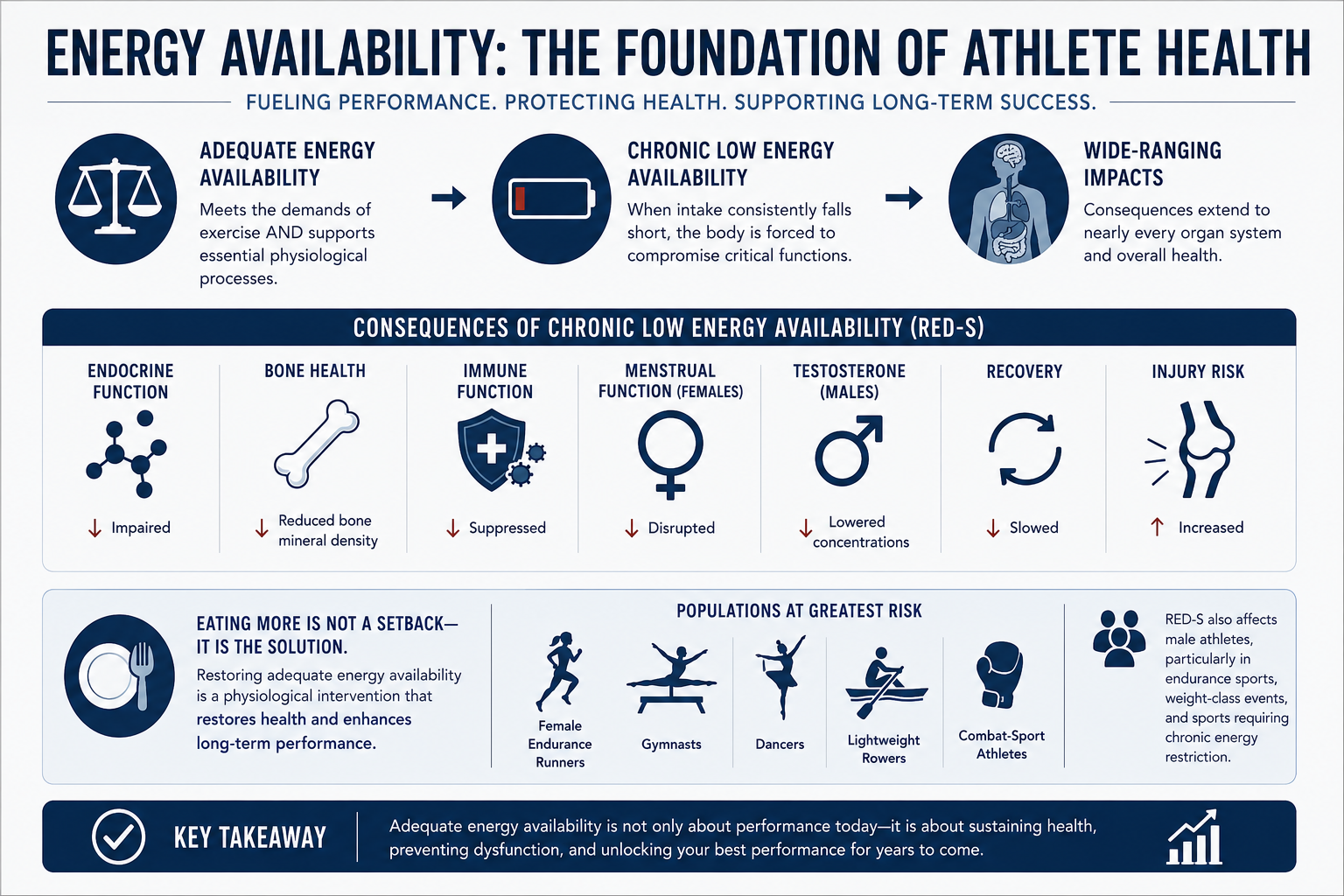
Maintaining adequate energy availability extends far beyond supporting training performance. When athletes consistently fail to consume enough energy to meet both the demands of exercise and the body's basic physiological functions, the consequences extend to nearly every organ system.
Chronic low energy availability can impair endocrine function, reduce bone mineral density, suppress immune function, disrupt menstrual function in females, lower testosterone concentrations in males, slow recovery, and increase injury risk.
Collectively, these consequences are recognized as Relative Energy Deficiency in Sport (RED-S). In these situations, eating more is not a setback to performance goals- it is often the physiological intervention required to restore health and ultimately improve long-term performance.
Female endurance runners, gymnasts, dancers, lightweight rowers, and combat-sport athletes are among the populations at greatest risk because body composition is often emphasized alongside performance. However, RED-S also affects male athletes, particularly those participating in endurance sports, weight-class events, and sports requiring chronic energy restriction.
This illustrates a broader principle of human physiology.
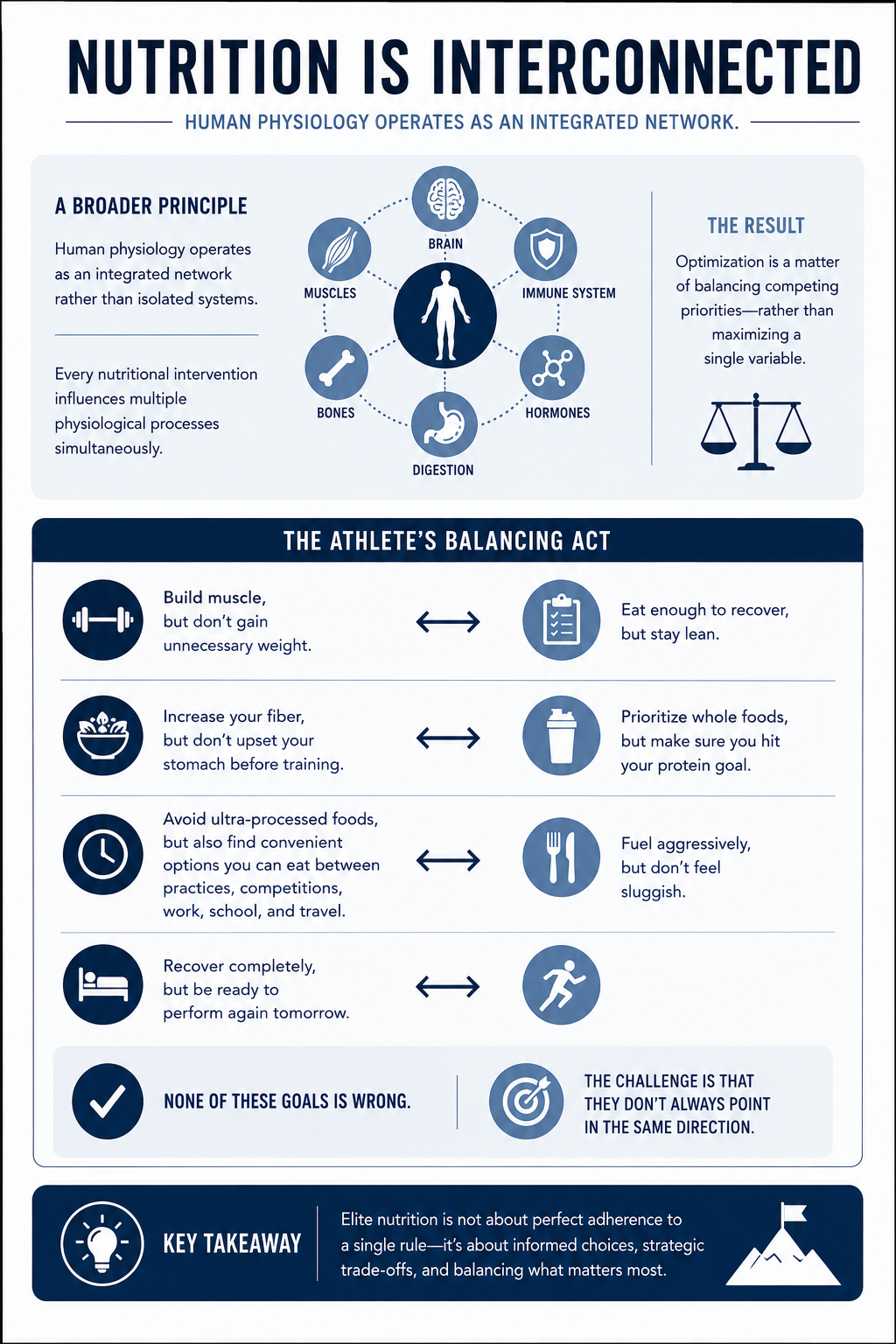
Human physiology operates as an integrated network rather than isolated systems. Every nutritional intervention influences multiple physiological processes simultaneously, making optimization a matter of balancing competing priorities rather than maximizing a single variable.
As an athlete, you are often asked to optimize everything at once.
Build muscle, but don't gain unnecessary weight.
Eat enough to recover, but stay lean.
Increase your fiber, but don't upset your stomach before training.
Prioritize whole foods, but make sure you hit your protein goal.
Avoid ultra-processed foods, but also find convenient options you can eat between practices, competitions, work, school, and travel.
Fuel aggressively, but don't feel sluggish.
Recover completely, but be ready to perform again tomorrow.
None of these goals is wrong.
The challenge is that they don't always point in the same direction.
Part of the reason these goals appear contradictory is that athletes are not meant to pursue all of them with every meal. Unlike nutrition recommendations for the general population, sports nutrition is periodized alongside training.
A recovery day, heavy training day, competition day, taper week, travel day, and off-season training block each place different physiological demands on the body. Consequently, carbohydrate intake, protein distribution, fiber consumption, hydration, and total energy intake may all need to shift accordingly. Performance nutrition is not static- it adapts to the physiological demands of the moment.
That's why the question for athletes isn’t "What's the healthiest food?" but rather, "Healthy for what?"
Healthy for building muscle?
Healthy for marathon training?
Healthy for a healthy gut microbiome?
Healthy for reducing inflammation?
Healthy for making weight?
Healthy for maximizing sprint speed?
The answer changes depending on the physiological demand.
A dietary pattern that supports long-term gut health may not resemble the meals that optimize race-day performance.
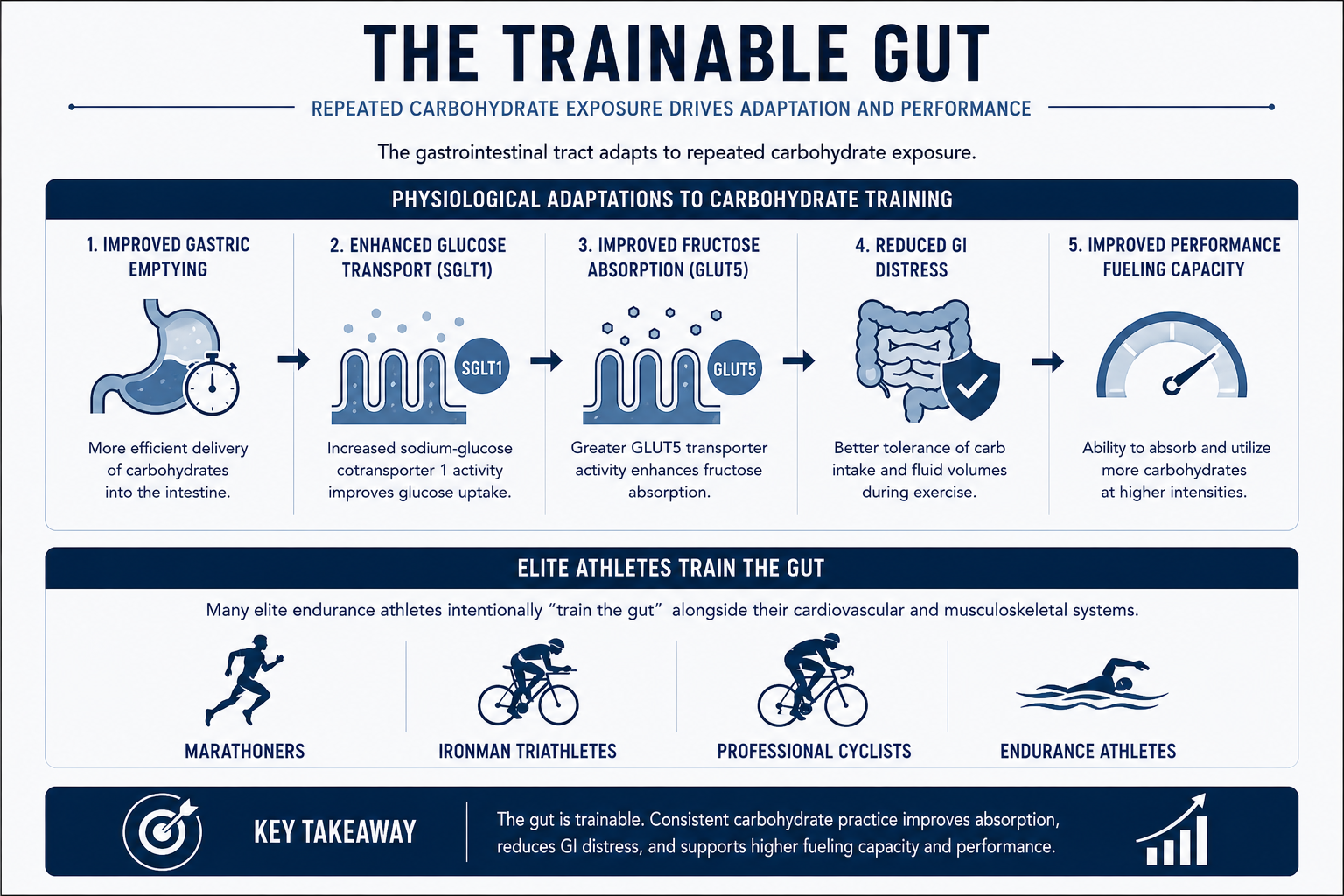
Research has demonstrated that the gastrointestinal tract can adapt to repeated carbohydrate exposure. Regular practice with carbohydrate-rich beverages, gels, and larger fluid volumes increases gastric emptying efficiency, enhances intestinal glucose transport through sodium-glucose cotransporter 1 (SGLT1), improves fructose absorption through GLUT5 transporters, and reduces gastrointestinal distress during competition. Consequently, many elite marathoners, Ironman triathletes, and professional cyclists intentionally "train the gut" alongside their cardiovascular and musculoskeletal systems.
Building additional muscle may improve strength and resilience to injury, but because muscle is metabolically active tissue with mass, there comes a point in many endurance and weight-bearing sports where additional muscle begins to reduce movement economy.
For example, additional lean mass is advantageous for an offensive lineman in American football, whose performance depends on force production and collision tolerance. In contrast, endurance athletes such as marathon runners, professional cyclists, and elite swimmers often benefit from maximizing relative power output while minimizing unnecessary body mass, illustrating that "more muscle" is not universally synonymous with better performance.
Likewise, several of the most evidence-based sports supplements carry gastrointestinal tradeoffs. Creatine monohydrate remains one of the most extensively researched ergogenic aids available. By increasing intramuscular phosphocreatine stores, creatine enhances the rapid regeneration of adenosine triphosphate (ATP) during repeated high-intensity efforts, improving strength, power output, sprint performance, training capacity, and lean body mass (Kreider et al., 2022). However, large loading doses may transiently increase gastrointestinal discomfort, bloating, or water retention in susceptible individuals. Similarly, sodium bicarbonate increases extracellular buffering capacity and improves repeated high-intensity performance, yet it is equally well known for causing nausea, bloating, and diarrhea when dosing protocols are not carefully individualized.
Even the concept of a "healthy diet" becomes more nuanced in elite sport. Nutrient-dense, minimally processed foods form the foundation of a healthy dietary pattern, yet they are not always the most practical choice immediately before competition. Sports drinks, carbohydrate gels, white rice, sourdough bread, bananas, and other rapidly digestible carbohydrate sources intentionally sacrifice satiety and fiber in favor of rapid gastric emptying, accelerated intestinal absorption, and immediate glucose availability to working skeletal muscle.
Eating for performance is not about eating perfectly. It is about understanding what your body needs, when it needs it, and recognizing that nutritional strategies should reflect specific physiological goals rather than universal rules.
The best diet for recovering from yesterday's training session may not be the best diet for tomorrow's race. The meal that promotes microbial diversity may not be the meal that leaves an athlete feeling their best thirty minutes before stepping onto the field.
Nutrition is not a collection of rigid rules to memorize. It is an exercise in prioritization.
The internet often searches for absolutes-
Eat more protein.
Eliminate carbohydrates.
Optimize your microbiome.
Avoid processed foods.
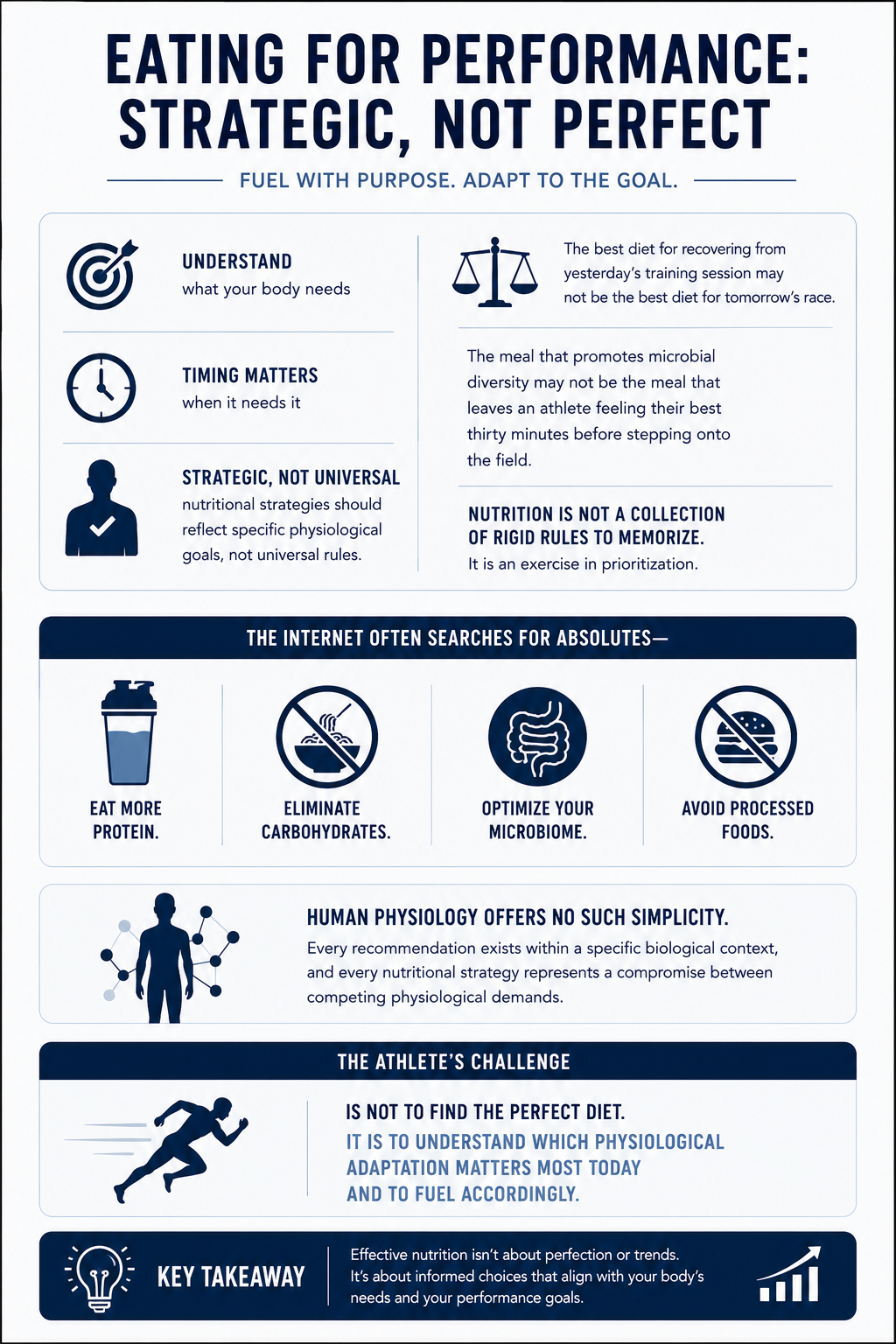
Human physiology offers no such simplicity. Every recommendation exists within a specific biological context, and every nutritional strategy represents a compromise between competing physiological demands.
The athlete's challenge is not to find the perfect diet.
It is to understand which physiological adaptation matters most today and to fuel accordingly.
References
American College of Sports Medicine, Academy of Nutrition and Dietetics, & Dietitians of Canada. (2016). Nutrition and Athletic Performance.Medicine & Science in Sports & Exercise.https://journals.lww.com/acsm-msse/fulltext/2016/03000/nutrition_and_athletic_performance.25.aspx
Burke, L. M., Hawley, J. A., Wong, S. H., & Jeukendrup, A. E. (2011). Carbohydrates for training and competition. Journal of Sports Sciences, 29(S1), S17–S27.https://pubmed.ncbi.nlm.nih.gov/21660838/
Jeukendrup, A. E. (2017). Training the gut for athletes. Sports Medicine, 47(Suppl 1), 101–110.https://pubmed.ncbi.nlm.nih.gov/28181199/
Kreider, R. B., et al. (2022). International Society of Sports Nutrition position stand: Safety and efficacy of creatine supplementation in exercise, sport, and medicine. Journal of the International Society of Sports Nutrition.https://jissn.biomedcentral.com/articles/10.1186/s12970-021-00412-w
Mountjoy, M., et al. (2023). IOC consensus statement on Relative Energy Deficiency in Sport (RED-S): 2023 update. British Journal of Sports Medicine.https://bjsm.bmj.com/content/57/17/1073
Phillips, S. M., & Van Loon, L. J. C. (2011). Dietary protein for athletes: From requirements to optimum adaptation. Journal of Sports Sciences, 29(S1), S29–S38.https://pubmed.ncbi.nlm.nih.gov/22150425/
Sonnenburg, E. D., & Sonnenburg, J. L. (2019). The ancestral and industrialized gut microbiota and implications for human health. Nature Reviews Gastroenterology & Hepatology.https://www.nature.com/articles/s41575-019-0191-8
Thomas, D. T., Erdman, K. A., & Burke, L. M. (2016). Nutrition and athletic performance. Medicine & Science in Sports & Exercise.https://journals.lww.com/acsm-msse/fulltext/2016/03000/nutrition_and_athletic_performance.25.aspx
David, L. A., et al. (2014). Diet rapidly and reproducibly alters the human gut microbiome. Nature.https://www.nature.com/articles/nature12820